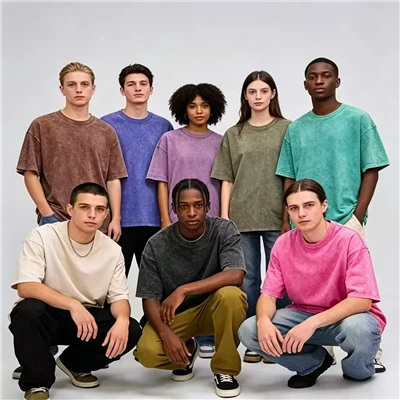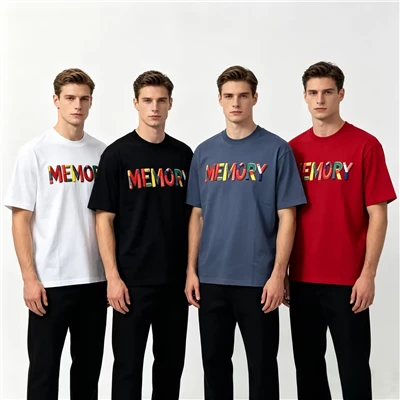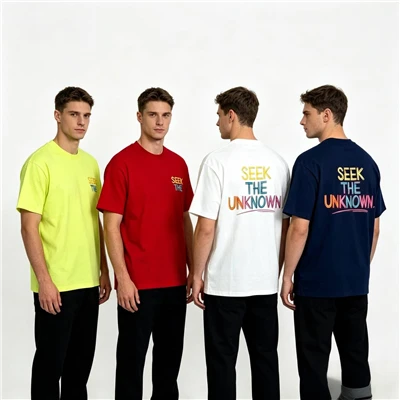
The term "T-shirt" is a phonetic adaptation that retains the initial letter "T" from its English original. Yet, this hybrid term-part Chinese, part English-hardly carries an exotic air. Perhaps this is because the T-shirt has become so deeply embedded in our daily lives that we tend to overlook it; a simple nudge is all it takes to realize that even the most mundane, everyday objects can harbor surprisingly fascinating stories.
The First Touch of Romance
In the spring and summer, as a sea of colorful T-shirts drifts through the streets, who would guess that they began as undergarments for laborers performing heavy, manual work? In a sense, the T-shirt was to men what the bra is to women today-a garment not meant to be seen. It only truly revealed itself when worn beneath sleeveless work overalls. In the early 20th century, clothing catalogs marketed the T-shirt strictly as an undergarment. By 1930, while its status as an undergarment remained largely unchanged, people began experimenting with wearing it as an outer layer-giving rise to what became known as the "sailor shirt." As sailors wore them out to sea, the vast blue ocean and clear, open skies imbued the T-shirt with its first, faint touch of romance.
An Iconic Encounter
The humble, collarless, short-sleeved knit shirt gained nationwide fame when it appeared on the silver screen, worn by the legendary Marlon Brando. Fans were electrified by the sight-a moment that arrived with the New York premiere of *A Streetcar Named Desire* on December 3, 1947. What captivated audiences was not merely Marlon Brando's rugged, raw masculinity and his mischievous, roguish gaze, but also his simple, unadorned white T-shirt. Elia Kazan, the film's director, once revealed-with a touch of enigmatic pride-that Brando's iconic T-shirt look was not the result of careful, premeditated design, but rather a stroke of pure chance; Brando simply happened to be wearing it when he arrived for rehearsals. Following the nationwide release of *A Streetcar Named Desire* in 1950, Brando's white T-shirt became a household name. This soft, form-fitting garment liberated male aesthetics from the rigid, monotonous, and conventional sartorial standards of the upper class, revealing a masculine physique that stunned and dazzled viewers-quickly becoming a template for style across America and the rest of the world.
The Rebellious Hero
The 1950s marked a golden era for American culture, as Hollywood films-and the trends they showcased-spread globally, fueling the international rise of the T-shirt. Together with blue jeans and black leather jackets, the T-shirt helped forge the archetype of the "rebellious hero"-a figure who deeply influenced the younger generation and signaled a profound contempt for, and rejection of, traditional etiquette and upper-class sensibilities. In the film *Rebel Without a Cause*, James Dean-sporting a T-shirt with his jacket collar slightly turned up-became a towering hero for teenagers who embraced rebellion. Meanwhile, the comedic image of actor Art Carney wearing a black vest over a white T-shirt further underscored the T-shirt's deep connection to the common man. Subsequently, a wave of films centered on rebellious youth adopted the T-shirt as a staple, imbuing the garment with a distinct, unprecedented personality and stamping it with the mark of subculture. While these rebellious characters often served as an outlet for suppressed traits in real life, their popularity on screen was one thing-whether they would be embraced or emulated by mainstream society was quite another. In reality, it was only after the T-shirt shed its cinematic association with "screen ruffians"-thanks to the emergence of new, different types of roles-that it began to be adopted by some men as everyday wear. Its comfort and hygienic qualities also gradually earned it wider appreciation.
A Different Kind of Mania
The widespread popularity of the T-shirt began in the 1970s. In 1973, *Women's Wear Daily* declared the T-shirt the primary mouthpiece for the counterculture of that era. By 1975, it is estimated that 48 million printed T-shirts had flooded the American apparel market-a momentum that would persist for years to come. Virtually any image or text one could imagine could be printed onto a T-shirt. Humorous advertisements, satirical pranks, self-deprecating ideals, shocking or taboo desires, and uninhibited, rebellious attitudes-all found a perfect outlet here. This seemingly unstoppable trend, however, also drew sharp, biting criticism from some, who dismissed the attempt to achieve specific goals through T-shirt slogans as childishly naive. The author wrote, with a touch of irony: "If people aren't willing to listen to what you have to say, why would you expect them to listen to what your T-shirt has to say?"