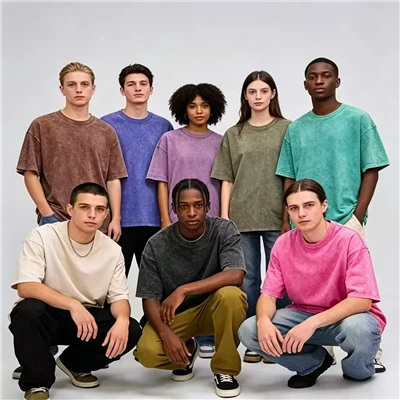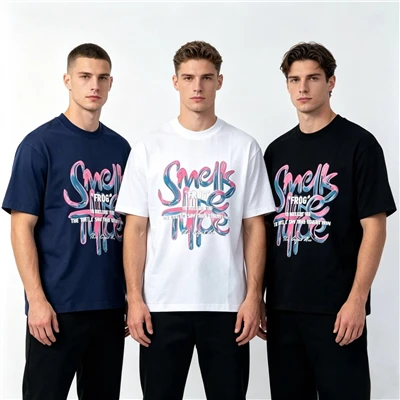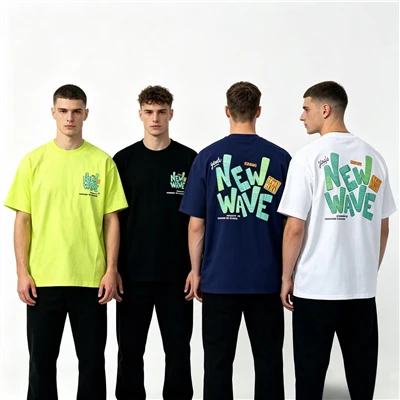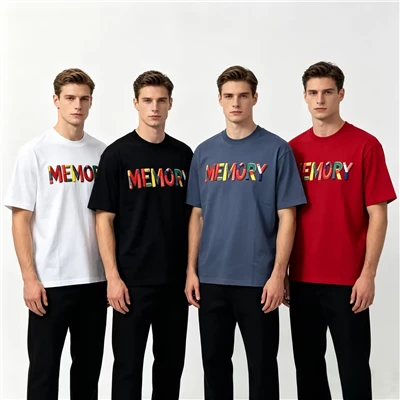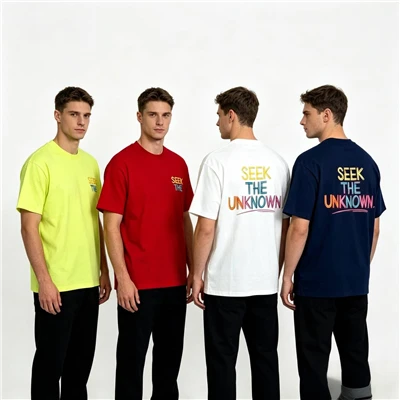
Regardless of the passage of time, successive generations of young people have grown up with an undiminished passion for T-shirts, and the sheer variety of T-shirt prints remains as imaginative and diverse as ever. In terms of materials, a wide array of microfibers, high-elasticity fibers, and synthetic polymers has largely replaced the original, singular reliance on cotton. Today, T-shirts are worn by people of all ages.
During the 1950s and 1960s, the pursuit of comfort and a relaxed lifestyle led to a blurring of the lines between different clothing categories and functions, giving rise to what we now call "leisurewear." Leisurewear encompasses clothing worn during one's spare time-whether after get off work or during leisure hours-including attire for the countryside, the beach, travel, or fitness. It is characterized by a sense of ease, simplicity, and freedom. The T-shirt falls squarely into this category; in everyday life, it is sometimes referred to as a "cultural shirt" (*wenhua shan*). As a staple of leisurewear, the T-shirt has appeared in every corner of the globe. While its original symbolic associations with counterculture and anti-establishment sentiment have faded, the T-shirt remains a versatile garment. It is a natural partner for jeans and jackets, yet it also pairs surprisingly well beneath a casual blazer. In fact, it is nearly impossible to list all the items a T-shirt can be paired with-or, for that matter, what it *cannot* be paired with. The T-shirt is inherently democratic, imbued with an accessible, "everyman" quality. For instance, during the 1998 flood relief efforts in China, many performers wore T-shirts on stage to express their solidarity with those affected by the disaster. At the same time, the T-shirt is also the height of fashion; brands like Calvin Klein and Ralph Lauren have frequently featured male models in T-shirts for their advertising campaigns. It is worth noting that, despite the constant innovation in prints and synthetic fabrics, the classic white cotton T-shirt has remained highly sought-after-a trend that was particularly pronounced during the 1980s. It is said that the white T-shirt evokes the spirit of the 1950s, keeping the essence of one's youth forever close at heart.